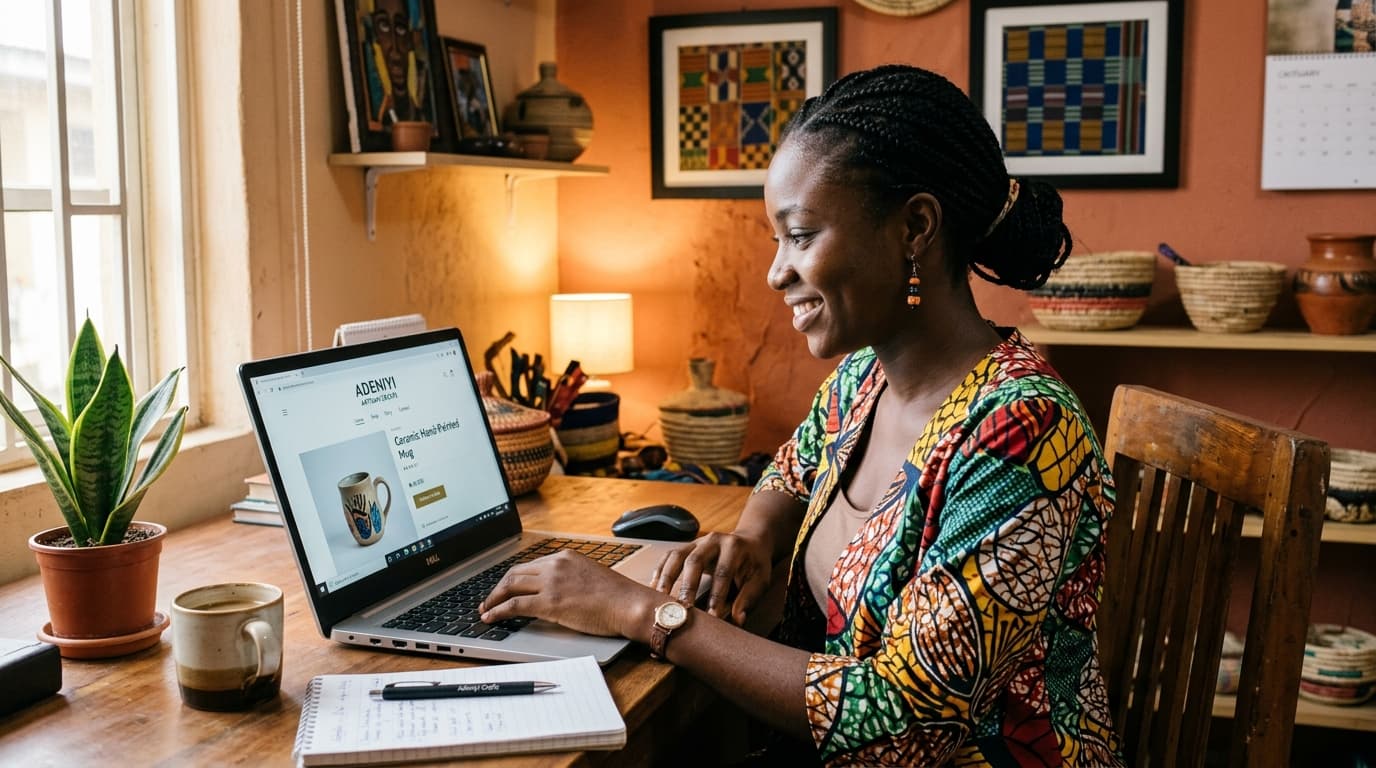
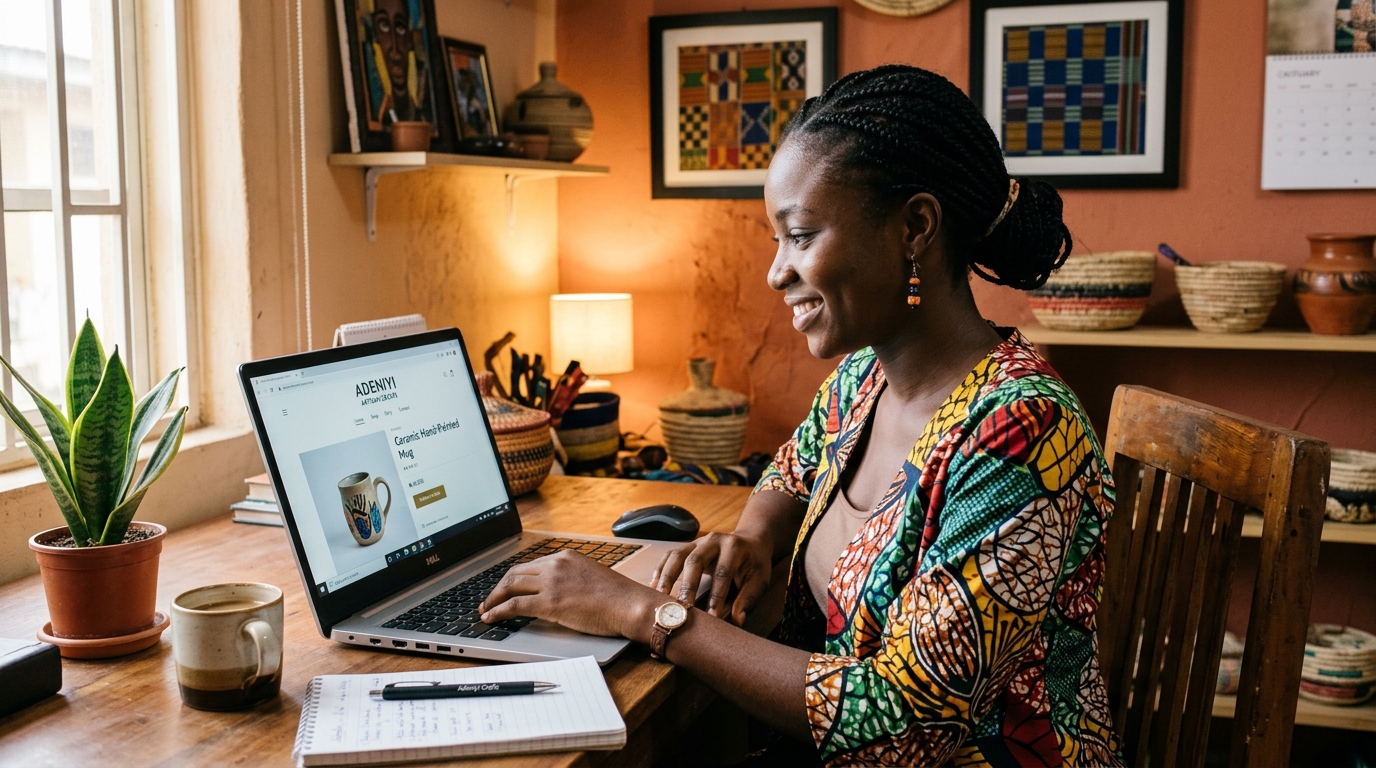
Imagine this: A Nigerian crochet business owner spent almost a year building a highly engaged audience on Facebook. She posted her work regularly, and her customers loved it so much that they would literally bid for her items in the comment section. One person would offer ₦40,000, another would counter with ₦60,000. Her Facebook page became a real, predictable income engine.
Then, without warning, her Facebook account was banned. She tried everything to recover it, but she couldn't get it back.
Desperate to keep her business running, she moved to TikTok and started posting videos while still fighting to recover her Facebook page. But eventually, she lost the TikTok account too. Just like that, all her customer connections vanished. She had to rebuild her audience entirely from scratch.
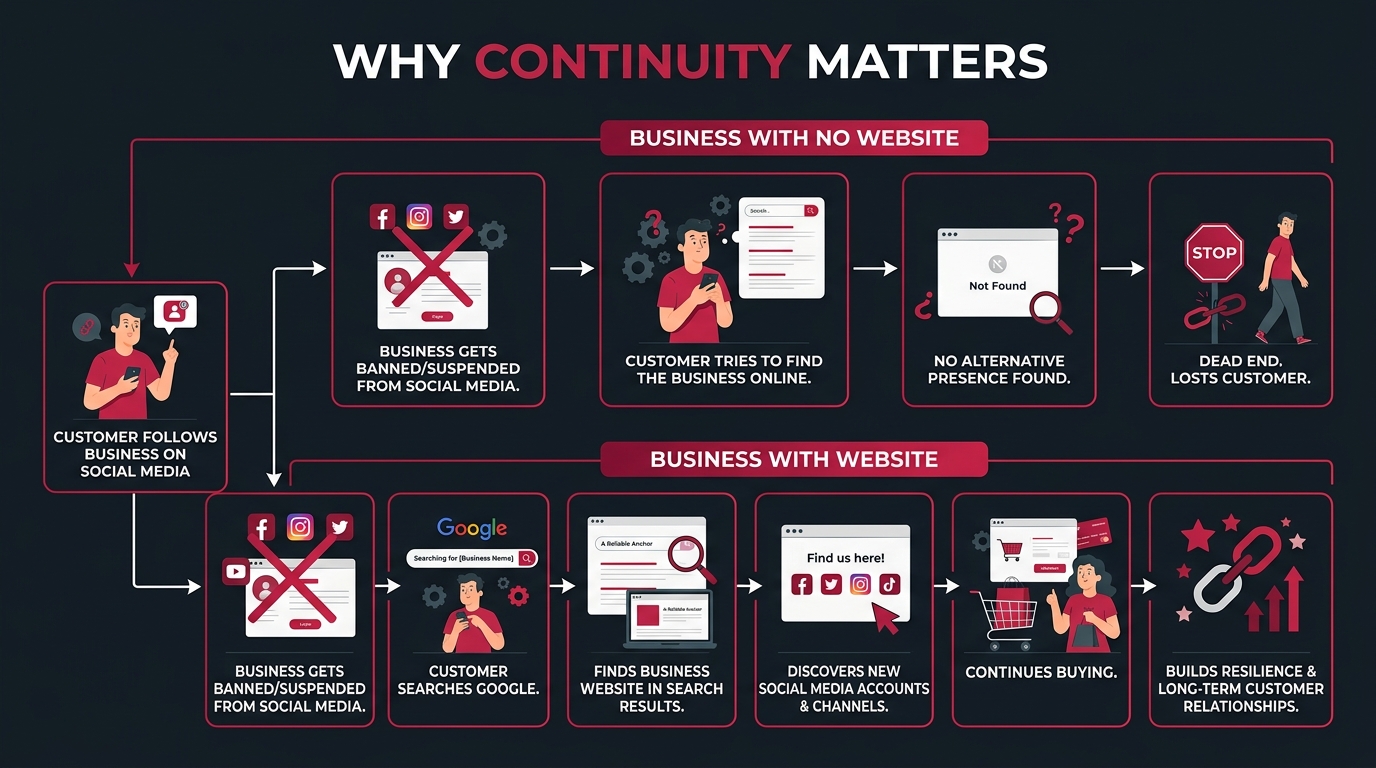
Now, let us be completely honest here. A website would not have magically stopped Facebook or TikTok from banning her accounts. That is platform risk, and it is a reality of the internet. But here is what a website would have done: it would have given her a permanent home base.
If she had a website, her most loyal customers could have simply remembered her business name, searched for it on Google, and found her contact information. They would have discovered her new social media handles right there on the homepage. They could have continued buying. Instead of a total business collapse, it would have been a temporary bump in the road. A website does not eliminate platform risk, but it creates an independent point of continuity when things go wrong.
The golden rule for doing business online is this: Build your audience on social media, but own your destination on the web.
Why Social Media Alone Is Not Enough
When you build your business entirely on WhatsApp, Instagram, Twitter, or Facebook, you are building a house on borrowed land. You do not own the property. You are just a tenant, and the landlord can change the rules — or kick you out — at any time.
Social media is incredible for discovery. It is where the attention is, and you absolutely should use it to find customers. But using it as your only business asset carries risks most business owners ignore until it is too late.
- Algorithm changes: One day you are getting thousands of views; the next day Instagram decides to push Reels instead of photos, and your engagement drops to near zero. You have no control over who sees your posts.
- Zero customer data ownership: If you have 10,000 followers, you do not actually have 10,000 contacts. You cannot email them. You can only reach them through the platform's filter.
- Account bans and hacks: Just like the crochet business owner, your account can be disabled by an automated system for a misunderstood policy violation. Trying to reach human support on these platforms is nearly impossible.
What a Website Actually Gives Your Business
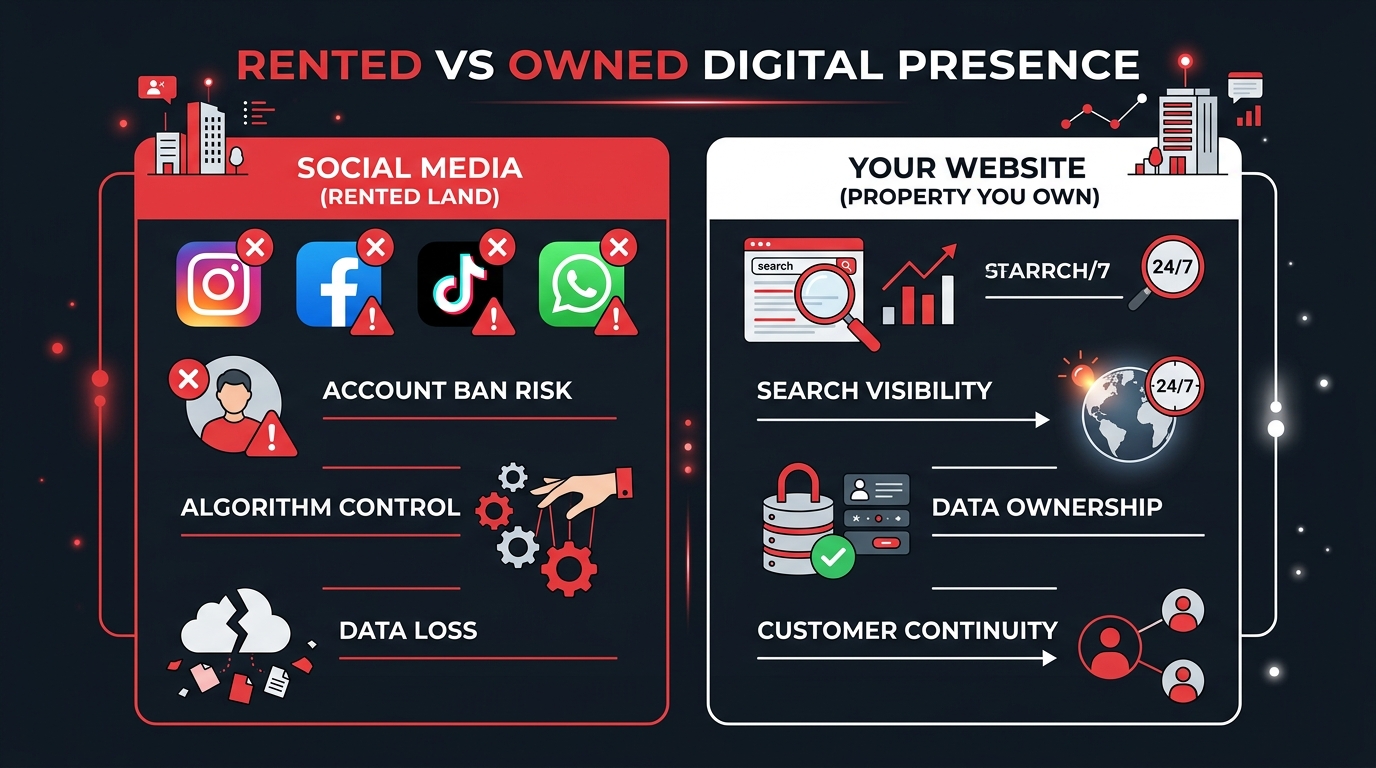
A website is your own digital property. You own the domain name, you control the content, and no algorithm can hide your homepage from someone who types in your web address. Beyond just ownership, a website gives you practical advantages that social media cannot match.
Professional Credibility and Trust
In Nigeria, rampant online scams have made buyers incredibly cautious. Anybody can open an Instagram account in five minutes and call themselves a vendor. But a professional website signals that you are a serious business. When a corporate client in Abuja is looking for a vendor, they are much more likely to trust a business with a functional website over an Instagram page that says "No Refund, DM for price."
24/7 Sales and Automation
Social media requires you to be constantly awake. If a customer sees your product at 11:00 PM and sends a DM, they have to wait until you wake up. By morning, they might have changed their mind. A website allows customers to view your catalog, see your prices, and even make payments while you are sleeping.
Deep Analytics and Retargeting
With a website, you know exactly what is happening. You can see how many people visited, which products they looked at, and where they dropped off. You can collect email addresses. Social media gives you basic insights; a website gives you actionable business intelligence.
What Happens When Customers Cannot Find You
Think about your own behavior as a consumer. What do you do when you hear about a brand but cannot remember their exact Instagram handle? You Google them.
If someone searches for your business name on Google and you have no website, Google will show them your competitors. Google does not care that you have great products; it only shows people who have an optimized web presence. By not having a website, you are actively leaving money on the table every time a customer turns to a search engine.
Common Objections — Addressed Honestly
"Everyone just uses WhatsApp and Instagram anyway."
Yes, and you should keep using them. But your website can have a direct WhatsApp button — customers who prefer chatting can still reach you that way. What a website does is handle the repetitive questions automatically, so you spend less time saying "How much? DM me" and more time fulfilling orders.
"I don't have the technical skills to manage it."
Ten years ago, managing a website required writing code. Today, modern content management systems are as easy to use as a Facebook profile. If you can upload a picture to Instagram and type a caption, you can manage a modern website. You just need someone to build the foundation properly.
"It's too expensive for my small business."
Think of a website as hiring a digital sales representative who works 24/7, never takes a day off, and handles all your product inquiries. When you frame it against the cost of lost customers or a banned social media account, a website is cheap insurance. When you're ready to understand realistic costs, read our guide on how much a business website costs in Nigeria.
Does Every Business Need a Website?
Let us be completely honest: No, not every single business needs a website on day one. If you are a student selling a few thrifted shirts to classmates, a simple WhatsApp Business catalog might be enough to start.
However, if you want to scale, if you sell high-ticket items, if you serve business clients, or if your income is entirely dependent on an online audience — you absolutely need one. If losing your Instagram account would cripple your income for the month, you are well past the point where you should have built a website.
What Kind of Website Does Your Business Actually Need?
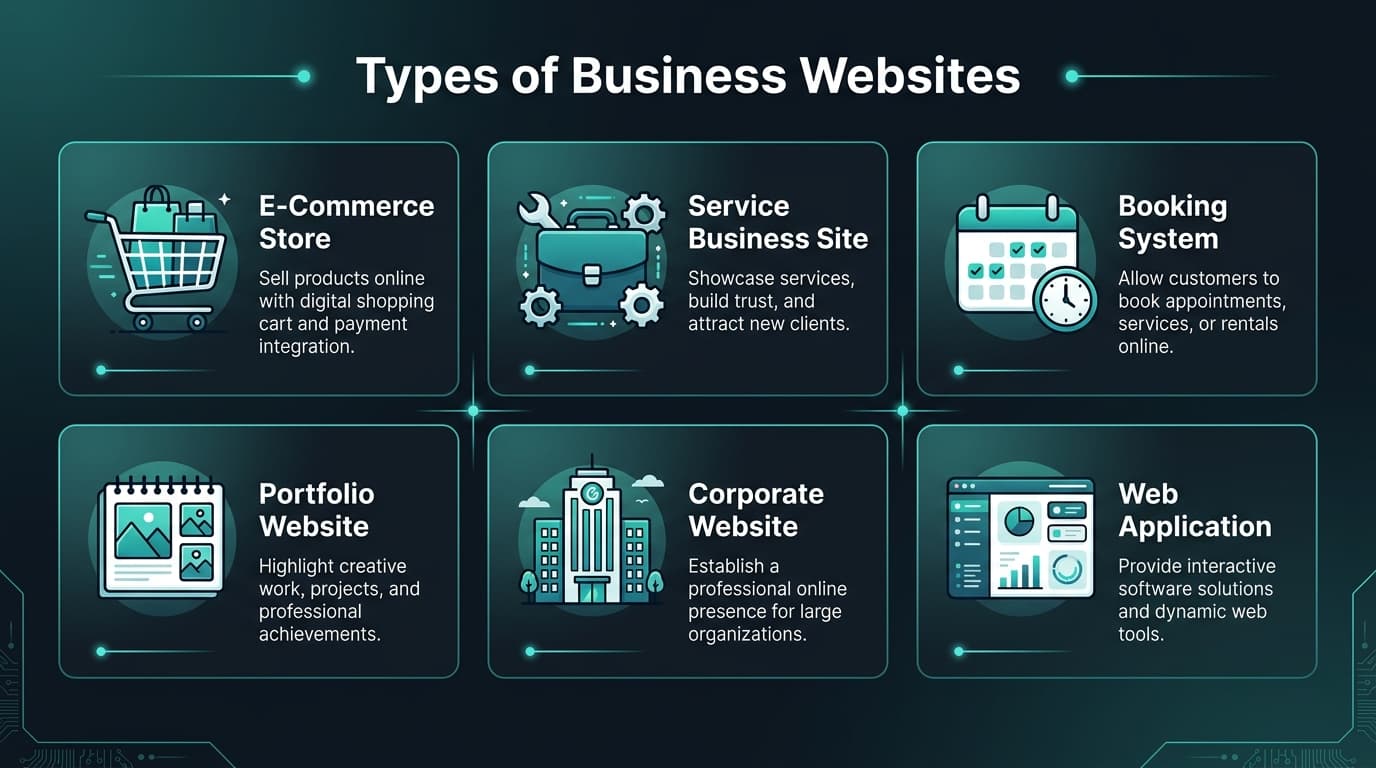
You do not necessarily need an expensive, complex platform. The type of website depends entirely on what your business does:
- Service businesses (consultants, agencies, freelancers): A simple portfolio or brochure website explaining who you are, your work, and how to contact you.
- Retail and fashion: An e-commerce site where customers can view products, check sizes, and pay via Paystack or Flutterwave.
- Appointment-based businesses (salons, clinics): A booking site that syncs with your calendar so customers book time slots without calling you.
If you are unsure where you fit, we have written a detailed guide on what type of website your business actually needs based on your industry and size.
The Bottom Line
Your social media accounts are marketing channels. They are billboards on a busy highway. But your website is your actual shop — one that you own and control. Use the billboards to catch people's attention, but direct them back to the shop you own.
Do not wait until an algorithm update or an unfair account ban wipes out your customer base. If you are ready to stop renting your online presence and start building your own digital property, explore Elitech-Hub's web development services. We build secure, fast, and professional websites that help Nigerian businesses protect their audience and grow their income.