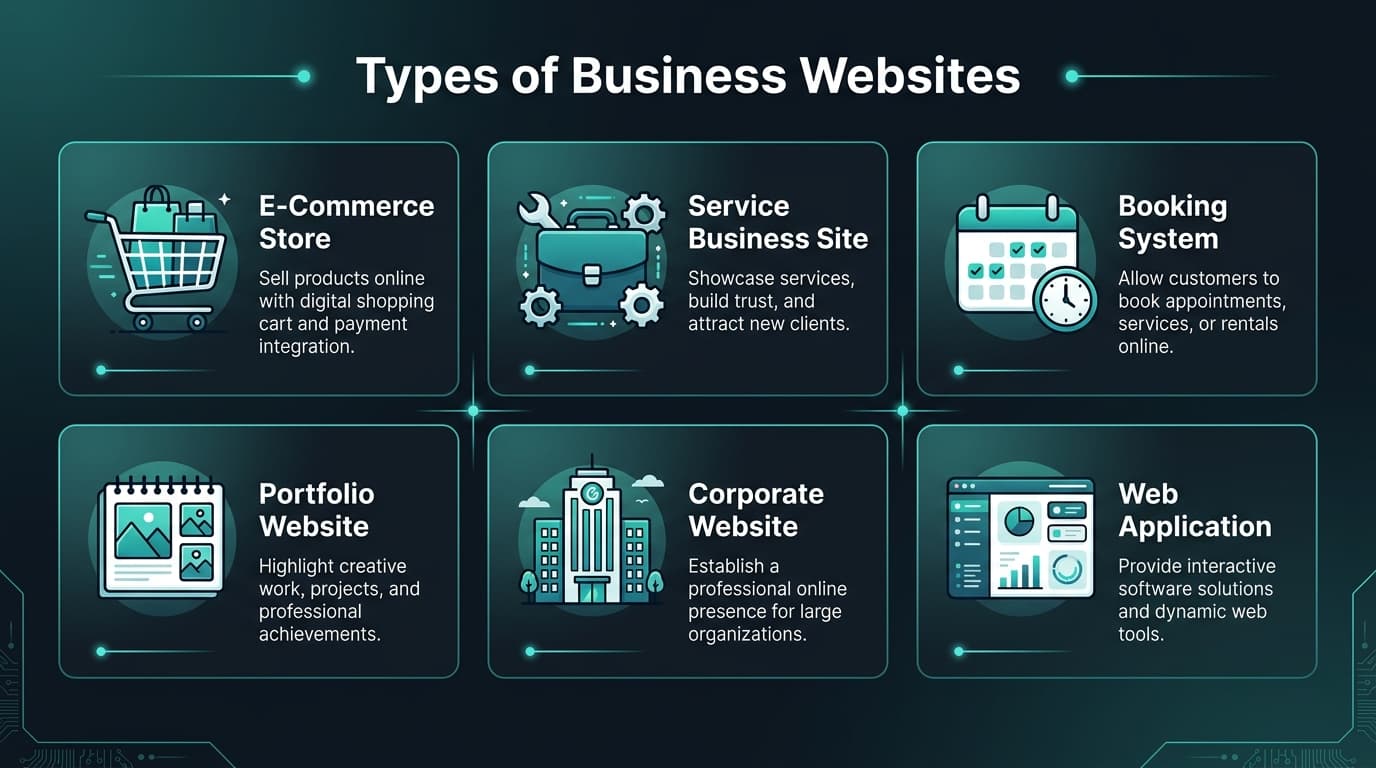
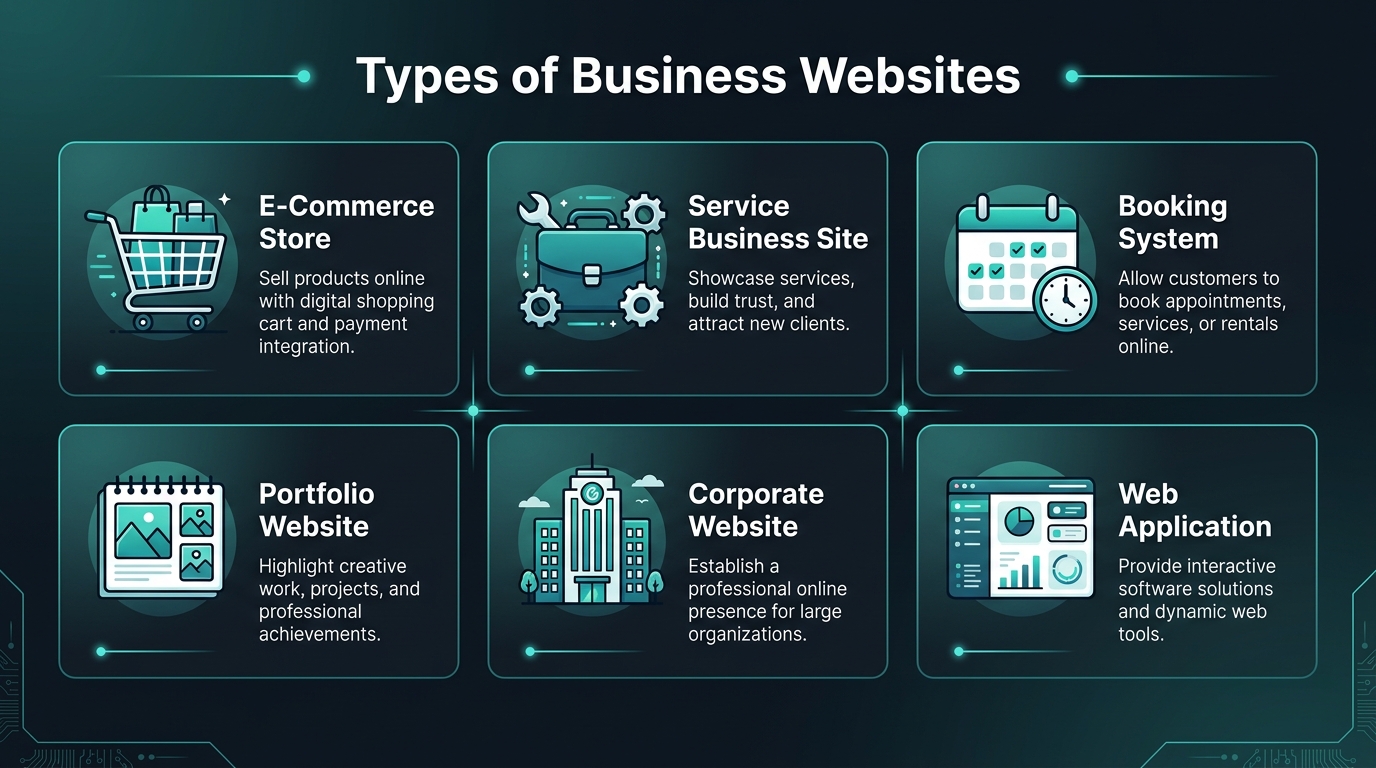
When business owners in Lagos, Abuja, or Ibadan finally decide to go online, they usually start with one question: "How much does a website cost?"
It sounds like a smart question, but it is actually the wrong one to start with. Asking a developer for the price of "a website" is like walking into a car dealership and asking for the price of "a vehicle." Are you looking for a delivery van to move goods from Alaba market, a salon car for Uber, or a rugged SUV for rough roads? The price depends entirely on what the vehicle needs to do.
Before you start worrying about how much a website of this type might cost in Nigeria, you need to ask a much better question: What does your business actually need a website to do?
Choosing the wrong type of website wastes your money. Choosing the right one turns your website into a digital asset that works for you 24/7.
Why the Type of Website Matters More Than the Price
A major mistake many business owners make is buying "a website" without understanding what they need it to achieve. They see a competitor with a flashy site, hire a developer, and end up with a digital brochure that looks nice but brings zero value.
If you run a fashion brand and your website does not let customers add clothes to a cart and pay, you just bought an expensive gallery. If you run a dental clinic and your website forces people to call you instead of booking online, you are missing out on late-night bookings from busy professionals.
Understanding why having your own website matters for any Nigerian business is step one. Step two is figuring out the specific features that will actually solve your business problems.
Mapping Your Business to the Right Website Type
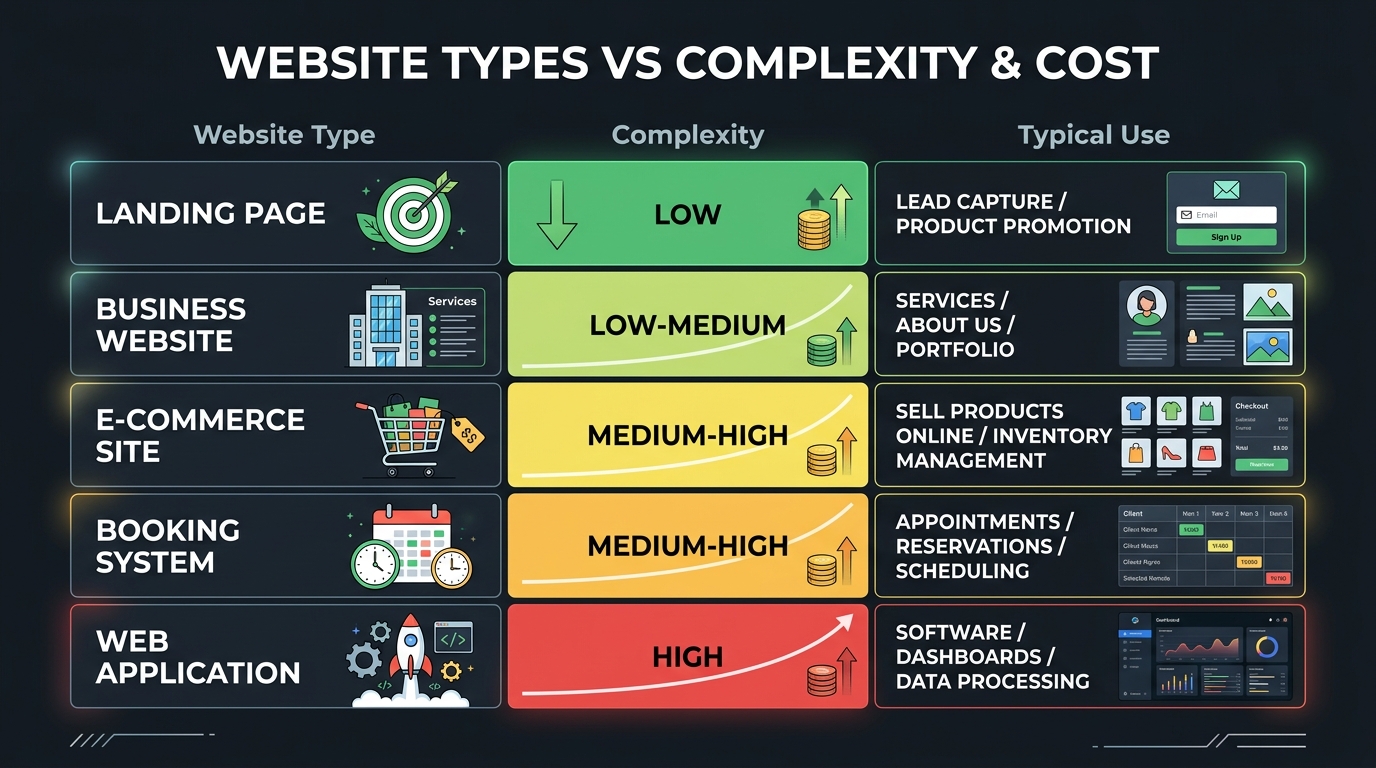
1. Product Sellers and E-Commerce Businesses
If you sell physical products — bags, electronics, skincare, shoes, groceries — you need an online store, not just a website.
What your website must have:
- Clear product catalogues and product pages with high-quality images.
- Shopping cart functionality and a smooth checkout process.
- Direct payment integration using Nigerian gateways like Paystack or Flutterwave.
- Order management and inventory tracking.
- Shipping calculators or clear delivery fee structures.
2. Service-Based Businesses
Do you offer a service rather than a physical product? Maybe you are a cleaning company, a solar installation expert, a lawyer, or an accounting firm.
What your website must have:
- Dedicated service pages explaining exactly what you do.
- An "About Us" page that builds trust and shows you are a real company.
- Testimonials and case studies proving you deliver results.
- Clear enquiry forms for requesting quotes.
- A direct WhatsApp integration button — because Nigerians love doing business on WhatsApp.
3. Physical-Location Businesses
If you run a restaurant, a boutique, a bar, or a salon, your main goal is getting people through your physical doors. Your website needs to act like a local magnet.
What your website must have:
- Your exact physical address prominently displayed.
- An embedded Google Map so people can easily get directions.
- Clear opening and closing hours.
- Local SEO optimization (so when someone searches "best restaurant in Ikeja," you show up).
- Quick-tap phone numbers and WhatsApp buttons for reservations.
4. Booking and Appointment Businesses
If your business runs on your time — a private clinic, a salon, a consultant, a private tutor — your website needs to act as your virtual receptionist.
What your website must have:
- A real-time booking calendar showing your available slots.
- An appointment scheduling system that prevents double-booking.
- Upfront payment or deposit capabilities to prevent no-shows.
- Automated email or SMS reminders for your clients.
5. Schools and Training Centres
Schools have specific needs. Depending on your size, you need either a basic informational site for parents or a complex portal for students and staff.
- Smaller schools: Admission information, curriculum details, tuition fees, and contact forms.
- Larger schools: A full management system with student login portals, assignment submission, grading, and fee payment portals.
6. Real Estate Businesses
Selling or renting properties requires a lot of visual proof and trust. Your website is your digital property catalog.
- A searchable property database with filters for location, price, and type.
- Detailed property listing pages with high-resolution photos.
- Agent profiles so buyers know who they are dealing with.
- Easy enquiry forms attached to specific property listings.
7. Personal Brands, Freelancers, and Professionals
If you are a photographer, graphic designer, freelance writer, or public speaker, your website is your digital CV and portfolio combined.
- A strong portfolio showcasing your best work.
- Your services list and potentially starting rates.
- Testimonials from happy clients.
- Links to your active professional social media profiles.
8. SEO-Driven and Content Businesses
If your business model revolves around content, traffic, or educating a large audience, your content is your product.
- A well-structured blog with clear categories.
- Strong content architecture and internal linking.
- Technical SEO basics (fast loading speeds, mobile responsiveness).
- Landing pages optimized for lead generation or newsletter signups.
Do You Need a CMS?
You may have heard developers mention a "CMS" or Content Management System (like WordPress). Do you actually need one?
Here is the simple truth: if you need to regularly update your website, you need a CMS. If you are constantly adding new products, changing prices, posting blog articles, or uploading new portfolio images, a CMS is non-negotiable.
A CMS gives you an admin panel. It allows you — the business owner — to log in and make daily changes yourself without paying a developer every single time you want to fix a typo or add a new picture. If your business is dynamic, insist on a CMS.
Three Questions to Ask Yourself First

Before you talk to any developer, sit down and answer these three questions. Your answers will immediately reveal what type of website you need.
1. What do customers currently do on my social media pages?
Are they asking for your price list? Asking for your location? Trying to book you? Your website should answer these exact questions automatically.
2. What do I want them to do on my website?
Don't say "read about my business." Be specific. Do you want them to fill out a quote form? Buy a pair of shoes? Book a 30-minute consultation? Your website must be built around this core action.
3. What would make my business easier to run online?
If you spend 3 hours a day replying to Instagram DMs asking "how much?", an e-commerce site with clear pricing saves you 3 hours a day. If you lose track of client bookings on WhatsApp, an automated calendar saves your sanity. Build the website that solves your biggest headache.
Static vs Dynamic: What It Actually Means
When you start talking to developers, they will throw around the terms "static" and "dynamic." Here is what they mean in plain English.
A static website is like a printed flier. Once coded, it stays the same. Changing text or images requires going back to the developer. Static websites are cheap, load very fast, and are secure. They are perfect for small businesses that just need to show their address, phone number, and a list of services that rarely change.
A dynamic website is like a digital billboard. The content can change depending on who is looking at it or what the admin does. An e-commerce store is dynamic — when someone buys the last pair of shoes, stock automatically updates to "Sold Out." Dynamic websites are more expensive but essential for shops, booking systems, and blogs.
The trade-off: don't buy a complex dynamic website if your business data rarely changes. But don't buy a cheap static website if you sell 50 different products — you'll be frustrated when you cannot update your own stock.
When to Keep It Simple vs When to Invest More
It is perfectly fine to start small. If you are a brand new business testing the waters, start with a simple, clean, 5-page service website. Let it establish your professional credibility, show your location, and give people a way to contact you.
However, invest in more complexity from the start if your business model relies on the website to function. If you are an online-only fashion brand, your website is your shop. If the website breaks, your business stops making money. You cannot afford to cut corners on the payment gateway or the product pages.
Always build for where your business is today, with a plan for where it will be tomorrow. A good developer will build a foundational site that can be upgraded later.
The Next Step
Now that you know what kind of website your business actually needs, you are ready to have a productive conversation about getting it built. You will not just be asking for "a website" — you will be asking for a booking system for your clinic, a local SEO-optimized site for your salon, or an e-commerce store for your fashion brand.
When you are ready to take that step and want to work with professionals who understand the Nigerian market, reach out to the Elitech-Hub web development team. We build digital assets tailored to what your specific business needs to grow.